Poor drainage is one of the easiest property issues to ignore — until it starts causing bigger damage. In the Colorado Front Range, fast snowmelt, spring rain, and sudden summer storms can move a lot of water in a short amount of time. If that water is not draining the right way, it can affect your landscaping, hardscapes, foundation, and overall curb appeal.
Whether you manage a home, HOA, multifamily property, or commercial site, spotting early drainage issues can save you from expensive repairs later. Here are five common signs your property may have a drainage problem.
1. Water pools in the same areas after every storm
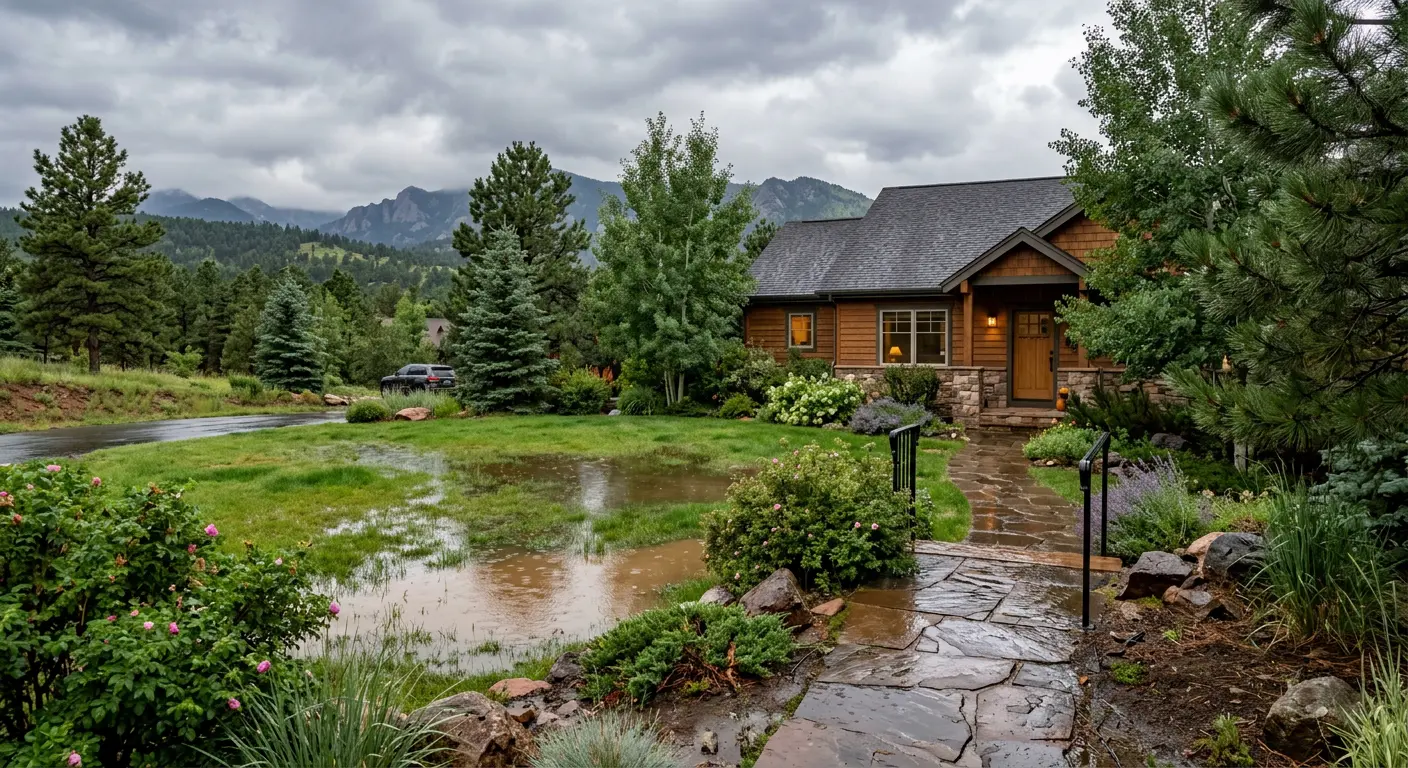
One of the clearest signs of poor drainage is standing water. If puddles stay in the lawn, near walkways, or around planting beds long after a storm, the property may not be sloped correctly or may need better drainage solutions.
Pooling water can drown grass, damage plant roots, create muddy areas, and attract pests. Over time, it can also wear down the soil and lead to erosion.
2. Soil or mulch keeps washing away
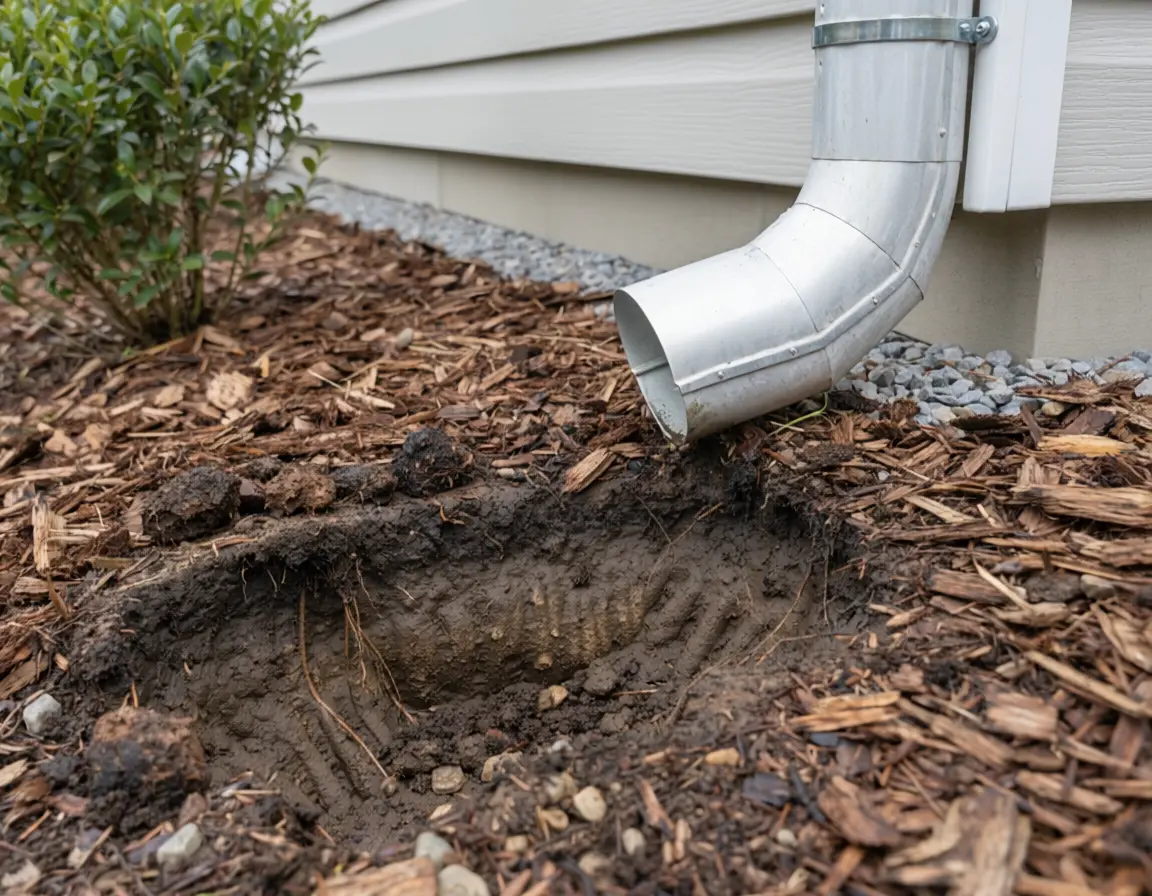
If you notice mulch drifting into sidewalks or rock and soil moving after rainfall, that is a sign runoff is not being controlled. This often happens around downspouts, sloped beds, or areas where water exits too close to the landscape.
When runoff is not directed properly, your landscaping starts to break down. Beds lose their clean appearance, roots get exposed, and you may end up replacing materials more often than necessary.
3. Grass looks patchy or weak in certain zones
Drainage issues do not always look like flooding. Sometimes they show up as turf stress. If certain parts of the lawn stay too wet, they may turn yellow, thin out, or develop bare spots. In other cases, runoff may wash over one area while another stays too dry.
This is why irrigation and drainage need to work together. If the water flow is uneven, the landscape will show it.
4. Walkways become slick or icy
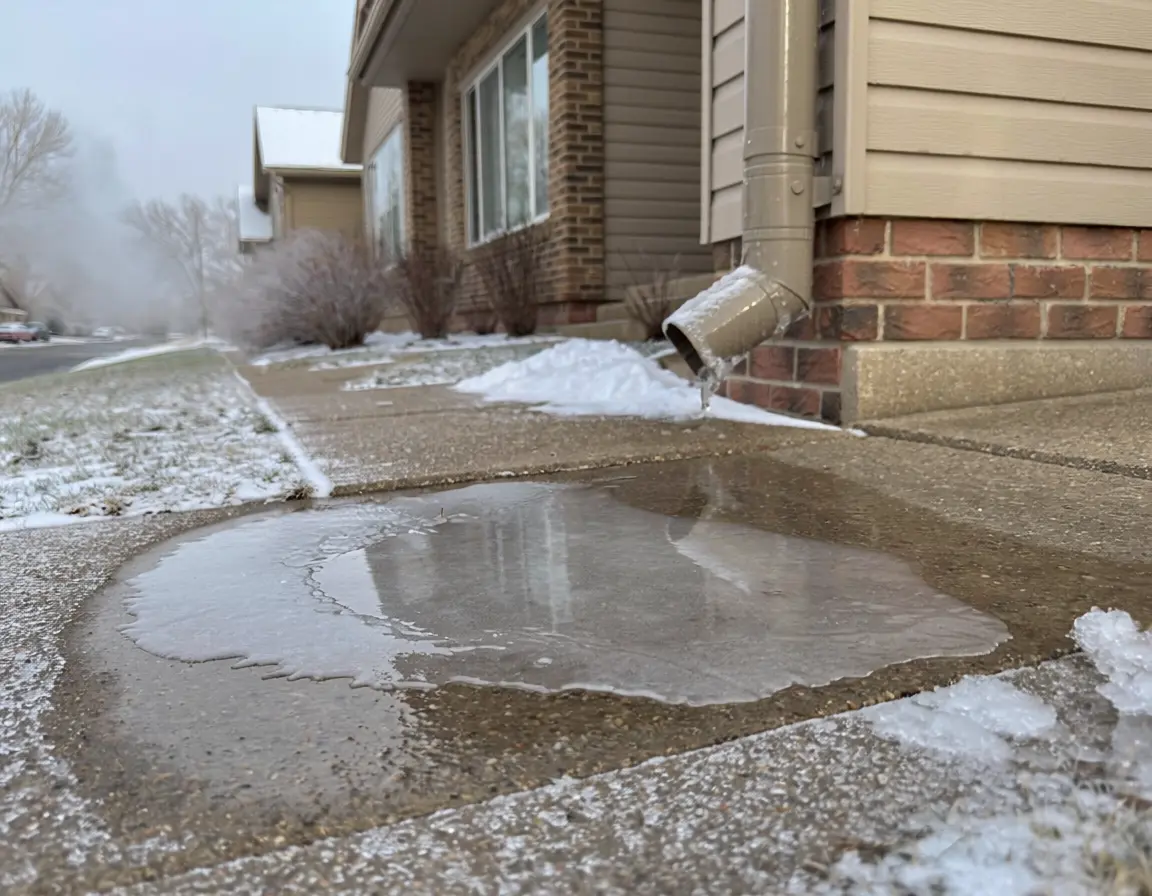
In the Colorado Front Range, drainage issues can become a safety problem in colder months. Water that drains across sidewalks, driveways, or entries can freeze and create slippery surfaces. Even a small amount of runoff can become a hazard overnight.
If you regularly see icy patches in the same area, it may be time to look at your downspouts, grading, or drainage setup. Fixing these issues helps protect both the property and the people using it.
5. Downspouts dump water too close to the building
Downspouts are supposed to move water away from the structure. If they discharge too close to the foundation or into a bed that cannot handle the volume, water problems start fast. You may notice erosion, soggy spots, or staining near the base of the building.
Simple fixes like extensions, pop-up drains, or reworking the drainage path can make a big difference. The goal is to move water where it can safely disperse without damaging the property.
Why drainage matters for long-term property value
Drainage is not just a landscaping issue. It affects the condition of turf, beds, walkways, and even the structure itself. When water is not managed well, small signs turn into bigger repair bills.
That is why drainage should be part of a broader landscape maintenance and property management strategy. A proactive approach helps protect curb appeal, reduce risk, and keep your site functioning the way it should.
Final thoughts
If your property has standing water, washouts, weak turf, or icy walkways, it is worth addressing the root cause early. In the Colorado Front Range, drainage problems do not usually fix themselves. They get worse with every storm, freeze, and thaw.
Ground Up Exteriors helps property owners and managers spot drainage issues early and create practical solutions that protect the landscape and the asset.