Ideally, sprinkler blowouts happen before sustained hard freezes. But if December caught you off guard, you still have options to protect pipes, valves, and the backflow assembly from expensive damage. This late-season guide covers immediate steps, what pros can still do, and how to prep for a clean spring startup across the Colorado Front Range.
If you haven’t blown out yet—start here
- Shut off water at the irrigation supply
Turn the irrigation shutoff to OFF. If you have a dedicated ball valve indoors, close it and note its location for spring. - Drain what you can
Open drain cocks or test ports on the backflow to relieve pressure. Gently tilt or sponge away pooled water; keep ports open for winter. - Insulate the backflow
Wrap the assembly with a fitted cover, towels, or insulation plus a weatherproof layer. Seal against wind; leave ports slightly open per manufacturer guidance. - Schedule a pro blowout ASAP
A contractor can often evacuate remaining water if zones and laterals aren’t solid ice. If sections are frozen, they may perform a partial blowout and return after a mild spell. - Do not over-pressurize
DIY compressors can damage valves if PSI is too high. If you’re unsure of your system specs, wait for a professional.
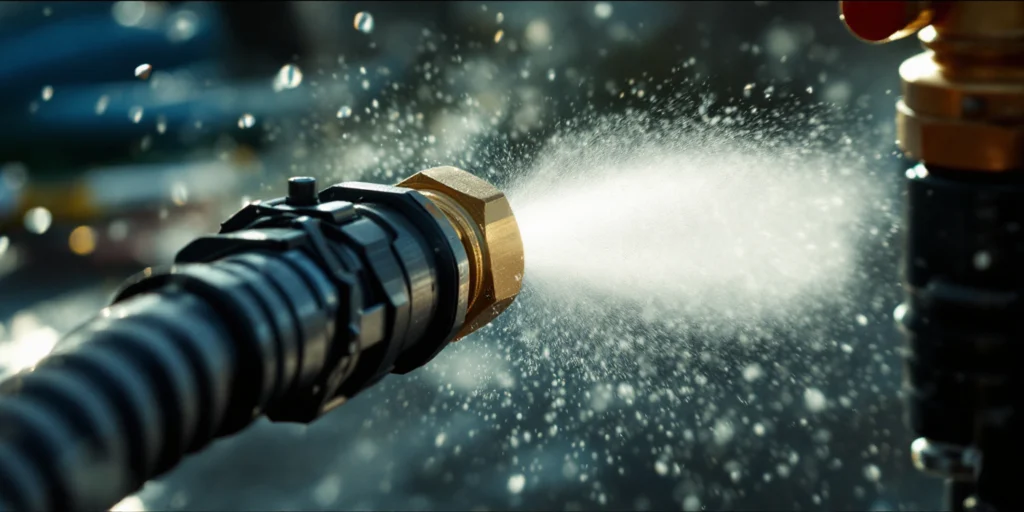
What if lines are already frozen?
- Don’t force valves—you could crack internal parts.
- Thaw slowly using ambient warmth; pros may use controlled heat at accessible components.
- Document now: If damage occurs, photos and notes help you prioritize repairs at spring startup.
Pro late-season services (what we can still help with)
- Partial or full blowout during mild windows
- Backflow protection and insulated wraps
- Freeze-damage assessment to plan spring repairs
- Manifold labeling & zone mapping for faster startup
Prevent repeat issues next year
- Put blowout on a calendar reminder for mid-to-late fall.
- Add an accessible shutoff and drain point if the current one is hard to reach.
- Consider drip zone isolation so you can shut down planting beds early and keep the lawn on a shorter schedule late season.
Spring startup tips after a missed blowout
- Pressurize slowly and watch the backflow/manifold for leaks.
- Run one zone at a time; look for bubbling soil or pooling that signals a crack.
- Replace cracked heads/risers and verify even coverage before programming the controller.