
Ice dams form when daytime melt refreezes at cold eaves, trapping water behind a ridge of ice. In the Denver metro, sunny afternoons plus overnight freezes make this common from December through February. Left alone, ice dams can push water under shingles, stain ceilings, and rot fascia.
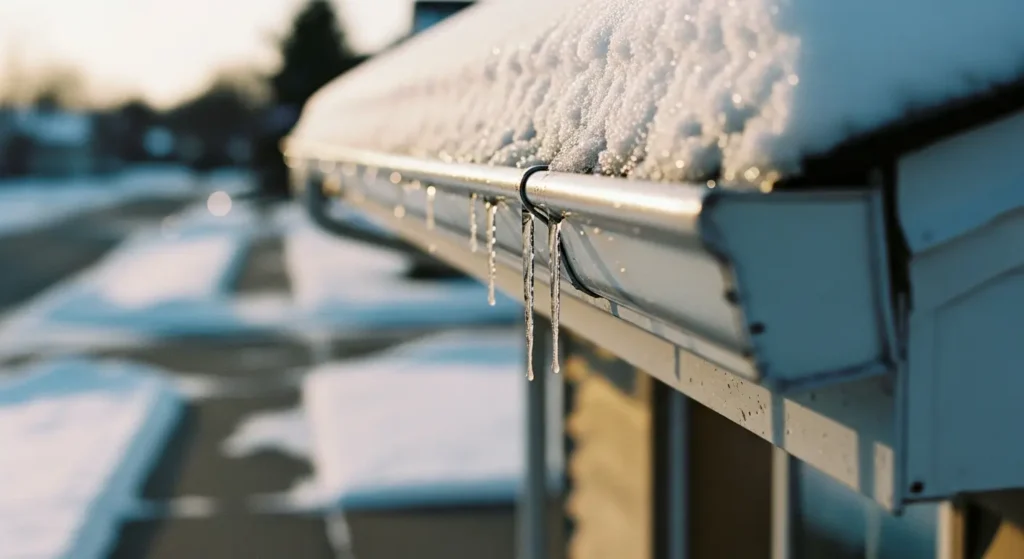
Fast, safe actions now
- Rake from the ground. Clear the first 3–4 feet of roof edge after storms. Never climb an icy roof.
- Open outlets. Keep gutters and downspouts clear; add extensions to discharge melt 6–10 feet from the foundation.
- Control indoor moisture. Run bath fans, use range hoods, and keep humidifiers modest to limit attic frost.
- Protect interiors. If dripping starts, contain water and call a pro—don’t chip ice.
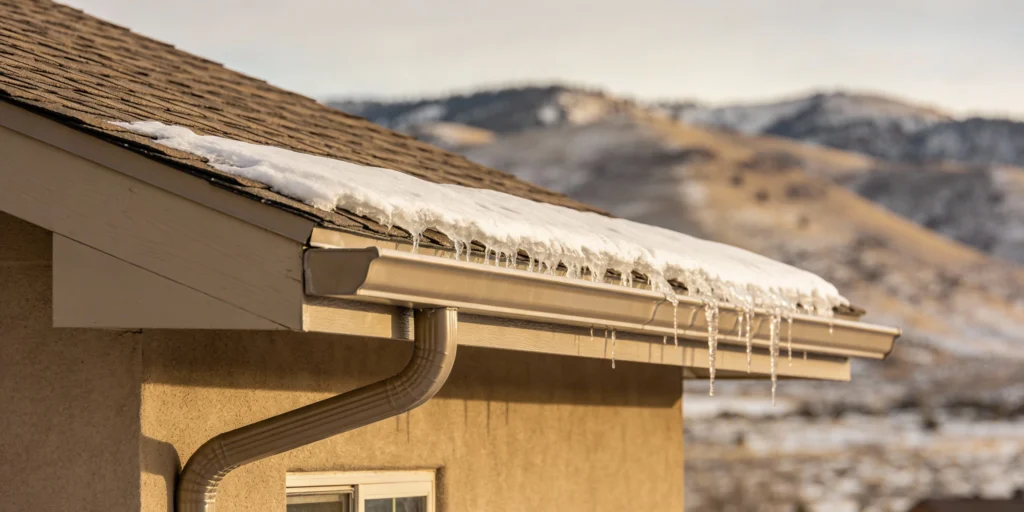
Long-term fixes that work
- Air seal the attic. Block leaks at lights, hatches, and chases so heat doesn’t warm the roof deck.
- Right-size insulation. Even coverage helps keep the roof deck cold and consistent.
- Balance ventilation. Ensure soffit intake and ridge/roof exhaust are working together.
- Tune drainage. Clean, pitched gutters and proper downspout extensions keep meltwater moving.
Need help fast?
Ground Up Exteriors can safely remove ice, then address ventilation, insulation, and drainage so dams don’t return.